

On this page
- Table of Contents
- 1. Short-Form Walkaround Reels
- 2. New Arrival Carousels
- 3. Personal Video Messages From Sales Staff
- 4. Before-and-After Photo Transformations
- 5. Window Sticker and Buyer's Guide Explainers
- 6. Behind-the-Scenes Lot and Team Content
- 7. Shopper Questions and Vehicle FAQ Posts
- 8. Customer Delivery and Milestone Posts
- 8 Instagram Content Formats for Dealerships at a Glance
- Build Your Posting Week, Then Let the Photos Do the Work
Dealership Instagram accounts rarely stall because the team ran out of ideas. They stall in week three, when whoever runs the account works out that one post means filming, editing, captioning, and scheduling on top of a full day on the lot. The appetite is real: 45% of respondents in a 2024 survey said content from vehicle brands or dealerships influenced their shopping, according to MediaPost's write-up of Adtaxi's Automotive Survey. The posts that would have earned that attention never got made.
The eight ideas below run on assets you already have. Listing photos you shot for the website. The walkaround clip a salesperson films before a car goes live. The faces of the people who answer the phone. The five questions your desk answered before lunch.
The mix runs in three lanes: inventory content that shows real cars, staff content that puts a name and a face on the store, and shopper education that answers what buyers are too polite to ask twice. Most car dealership Instagram ideas ask you to become a production studio. These ask you to reorganize what's already on your hard drive.
Table of Contents
- 1. Short-Form Walkaround Reels
- 2. New Arrival Carousels
- 3. Personal Video Messages From Sales Staff
- 4. Before-and-After Photo Transformations
- 5. Window Sticker and Buyer's Guide Explainers
- 6. Behind-the-Scenes Lot and Team Content
- 7. Shopper Questions and Vehicle FAQ Posts
- 8. Customer Delivery and Milestone Posts
- 8 Instagram Content Formats for Dealerships at a Glance
- Build Your Posting Week, Then Let the Photos Do the Work
1. Short-Form Walkaround Reels
A walkaround Reel is the highest-yield format on this list because the raw material already exists. You photographed the car from eight angles for the listing. Sequence those frames, add a slow move across the interior, and you have 15 to 30 seconds of vertical video without a second shoot.
The audience is already researching. A study of 500 car buyers found 87% researched vehicles on social channels and 68% purchased a vehicle they found through social media, as PRWeek reported on the study. That's a shopper arriving at your lot already knowing which car they want to see.
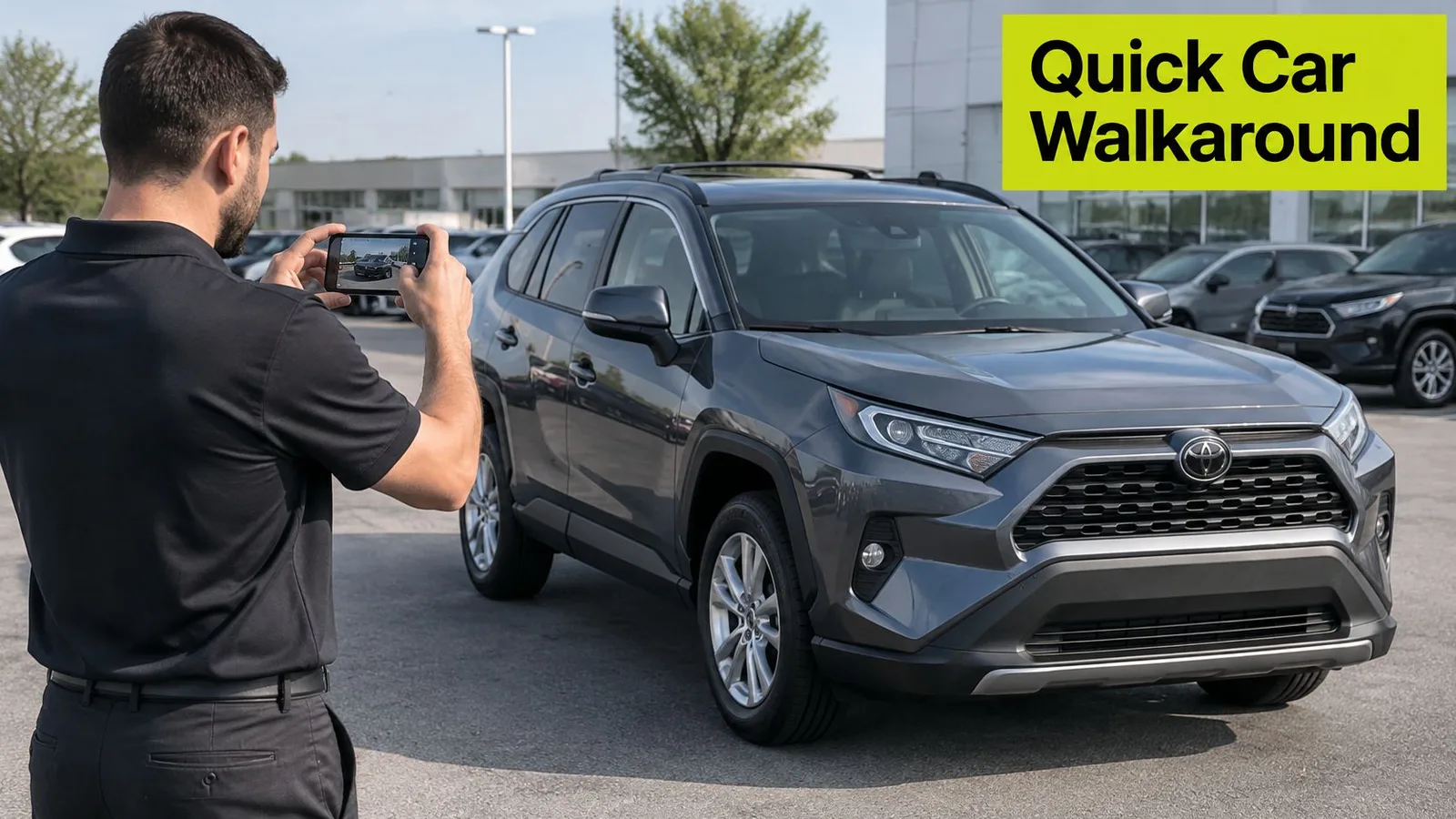
What separates a Reel that sells from one that decorates
- Open on the front three-quarter angle. It identifies the vehicle fastest, and Instagram decides in the first second or two whether to keep serving it.
- Put the facts in line one of the caption. Year, make, model, mileage, price. Plenty of viewers watch with the sound off.
- Stay under 30 seconds. Long enough for exterior, cabin, and one detail shot. Short enough that completion rate stays healthy, which is what drives distribution.
- Repeat the same opening and closing frame. After a month, followers recognize your format before they read the handle.
What flattens these videos is a presenter who spends eight seconds on the dealership name. Cut the logo card and cut the greeting.
Practical rule: if a shopper can't tell what the car is and what it costs within three seconds, the Reel is a brand ad rather than a sales tool.
Say your lot takes 20 cars this month. Twenty walkarounds is twenty posts, each a byproduct of photography you were doing anyway.
2. New Arrival Carousels
Carousels do a different job than Reels, and confusing the two is why so many accounts feel noisy. A carousel is the format a serious shopper saves. It's also the format that has to close the deal before someone drives over, because 50% of recent buyers visited only one dealership before buying, and 75% of buyers rated internet research the most helpful medium when choosing which dealership to visit, from a survey of 2,000 car buyers reported by Auto Remarketing.
Lock the slide order and never change it
Build a fixed sequence of five to ten slides: front, rear, driver side, passenger side, interior, dashboard, one detail shot, and a closing slide with price and hours. Use it for every vehicle, on every account, in every location. The repetition is the point. A shopper who has swiped through three of your carousels knows exactly where to look for the seat fabric on the fourth.
Two things go wrong here. The first is inconsistent framing, where one salesperson shoots tight and another shoots wide, and the grid starts to look like three different dealerships. The second is a weak first slide. Instagram shows slide one and nothing else until the viewer swipes, so lead with the cleanest, most identifiable image you have.
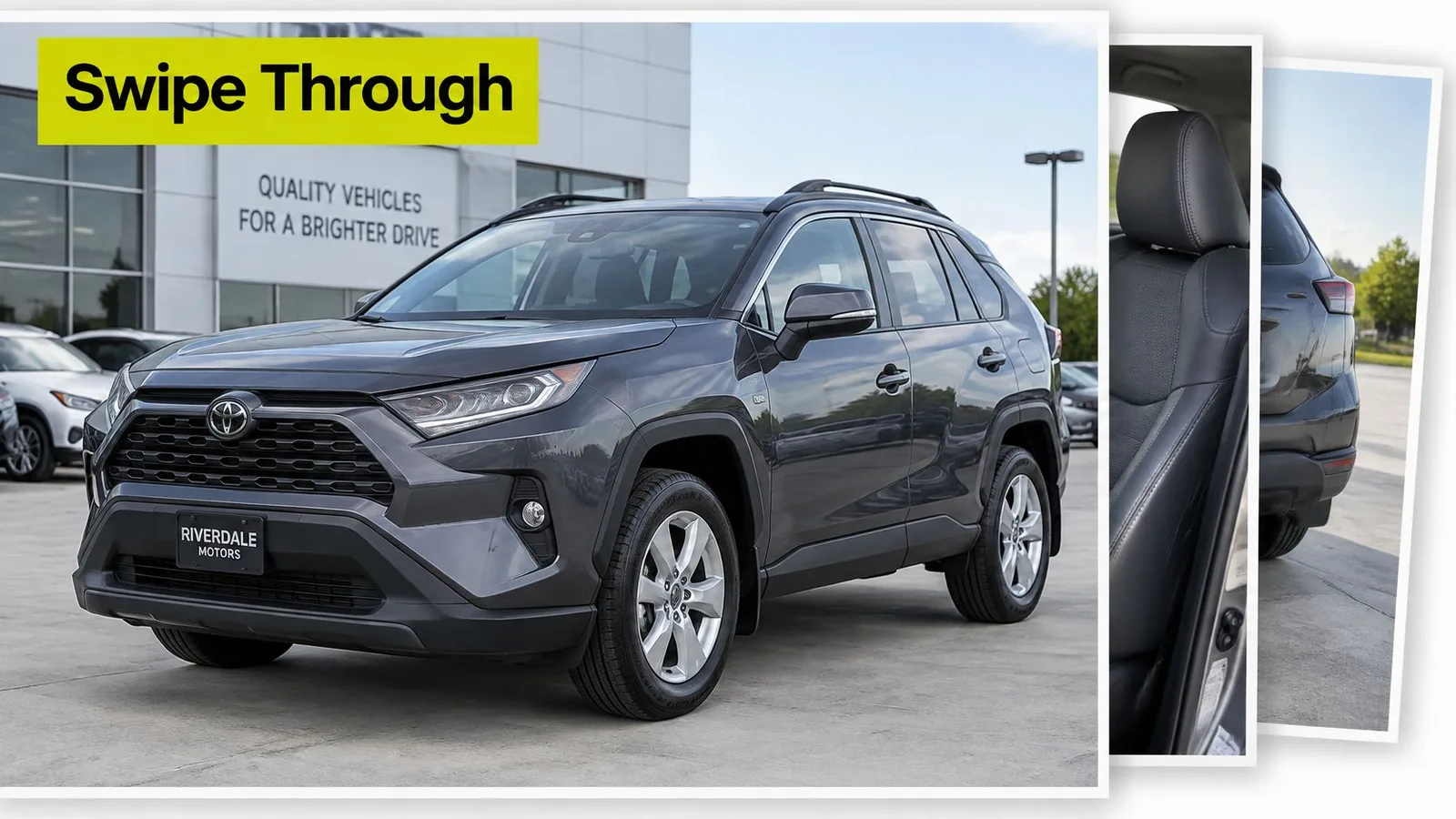
Accept the trade-off. Carousels rarely reach as many accounts as Reels. Judge them on saves, profile visits, and direct messages instead of views, or you'll kill the format that's producing your best leads.
3. Personal Video Messages From Sales Staff
A 30-second video where one named person talks about one specific car does something a polished carousel can't. It puts a human between the shopper and the purchase. Instagram reports that auto enthusiasts open the app 21 times a day and that 59% say Instagram informs what they buy, from Instagram's own auto insights. Frequency is on your side. Relevance is the variable you control.
The version that works is specific: the salesperson names the car, names the stock number, points the camera at the one feature the shopper asked about, and offers two appointment windows. Send it as a direct message to someone who has already viewed the listing, or post it to Stories with the stock number tagged.
Skip the spec-sheet recital
- Script three points, not a paragraph. Feature, condition note, next step. Bullet points on a sticky note beside the phone beat a memorized monologue.
- Keep the opening line identical across staff. "Hi, this is Dana at Riverside Motors with the 2021 CX-5" tells the viewer what they're watching before they decide to keep watching.
- Verify the facts before you hit record. Mileage, trim, and warranty status get quoted back to you in the showroom.
- End with one action. Book a test drive, reply with a question, or request the full video walkaround.
Where this falls apart is volume messaging. A generic video blasted to 200 people reads as an ad, and it converts like one. One video per serious enquiry, personalized, is the whole discipline, and it connects directly to lead generation for car sales rather than to follower counts.
4. Before-and-After Photo Transformations
This is the format most dealerships never post, and it's the one that earns the most comments from other dealers. Put the original lot photo on slide one and the finished listing image on slide two. Same car, same angle, different presentation. Watch how quickly followers understand what your merchandising team does.
The idea came out of a problem every lot has. A trade-in photographed against a chain-link fence and a dumpster looks like a cheaper car than the identical vehicle shot clean. Background replacement and lighting correction fix the presentation without touching the vehicle, and a repeatable automotive photo editing workflow makes both versions available on every car within minutes of the shoot.
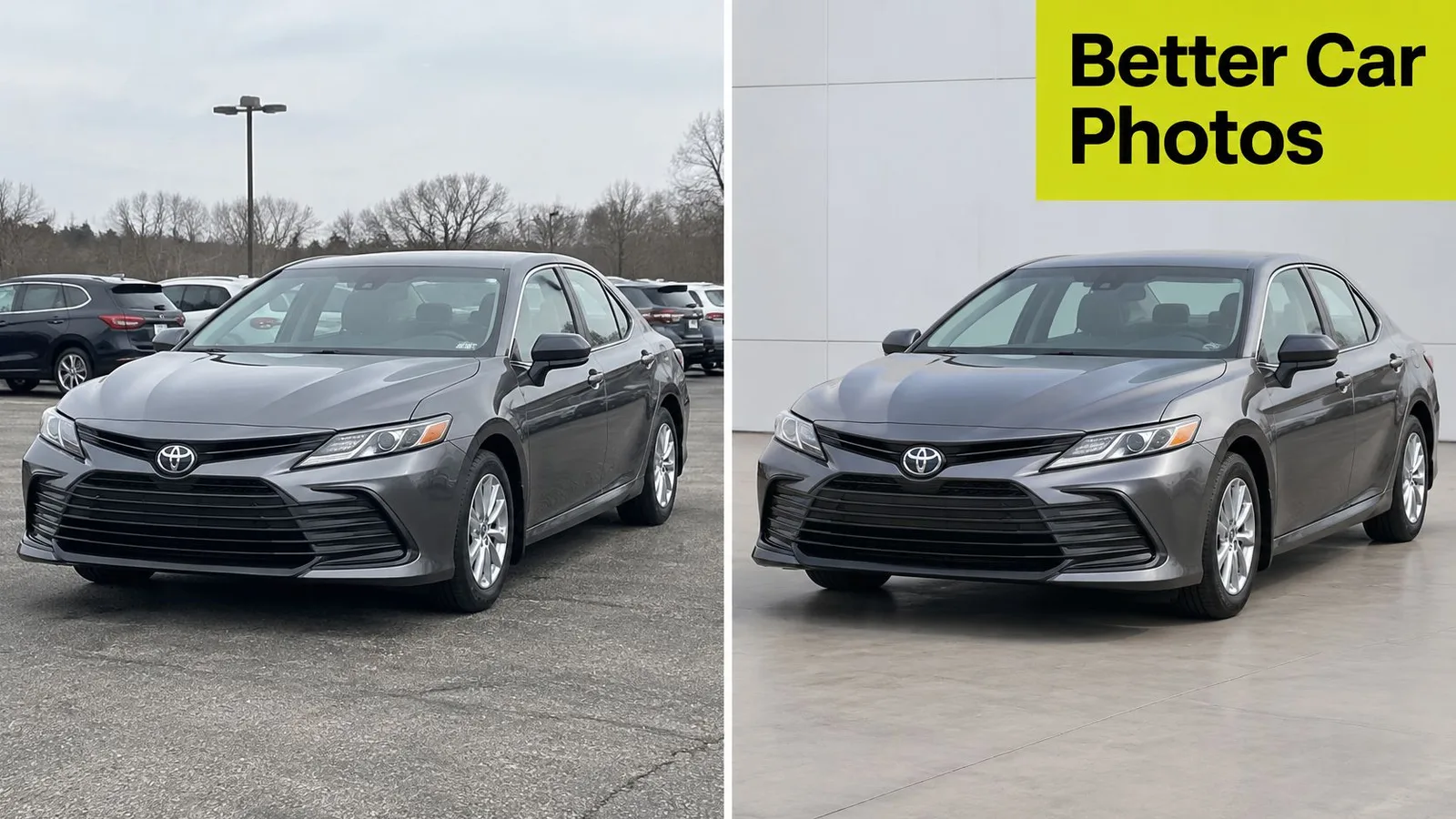
The caption is doing the real work
- State plainly that the car is unchanged. One sentence: the vehicle, mileage, and condition are exactly as photographed, only the backdrop was replaced.
- Keep the angle identical in both images. A different angle turns a comparison into a magic trick.
- Post a handful each week, not the whole lot. The format is a demonstration, not an inventory dump.
- Keep the originals retrievable. Someone will ask, and being able to produce the unedited file in a DM builds more trust than the post did.
The risk is obvious: a shopper who suspects you're hiding something will assume the worst. Naming the edit before anyone asks removes that suspicion and turns a photo trick into a credibility play.
5. Window Sticker and Buyer's Guide Explainers
These posts get the least engagement and the best direct messages. That's a fair trade if your goal is a shopper, not a like. Cox Automotive's 2025 buyer research found shoppers spent an average of 7 hours 11 minutes researching online across 4.6 sites, yet social media reached only 26% of buyers, behind third-party sites at 75% and dealer sites at 59%, as Oceanwide summarizes the research. Instagram isn't where the research ends. It's where the question gets answered early enough to change which lot the shopper visits.
Here's a reference walkthrough of what a sticker contains before you annotate your own:
The structure that works is one concept per slide. Slide one, what the MSRP line includes. Slide two, destination charges. Slide three, what the optional equipment list tells you about resale. Slide four, the fuel economy figures and why the range varies. Slide five, where to find the original vehicle window sticker for a used car that lost theirs.
Compliance reviews every slide
Have your compliance manager read the post before it publishes, and not the marketing coordinator. Used-vehicle Buyers Guides carry specific warranty disclosure obligations, and a well-meaning sentence about "full coverage" can undo a month of careful work. For recalls, explain what the notice means and how a shopper checks status by VIN, without promising a completion date you don't control. Post one explainer a week on a fixed day so it reads as a series rather than a one-off.
A sticker explainer will never be your most-viewed post. It will be the one a nervous buyer screenshots and sends to their spouse.
6. Behind-the-Scenes Lot and Team Content
The point of this format isn't to show that you have fun at work. It's to show that a real, accountable person handles the car before the buyer sees it. A fifteen-second clip of the detailing team finishing a certified pre-owned vehicle says more about your standards than any stock photo of a showroom.
Keep the camera pointed at the work
- Film the process, not the break room. Photographing a car, pulling a CARFAX, prepping a trade-in, checking tire tread. Team lunches rarely earn a second look.
- Get written consent from staff first. It's a small form and it prevents an awkward conversation.
- Keep customers and paperwork out of frame. No names, no deal jackets, no screen with a credit application visible.
- Split the polish level. Stories for candid and vertical, Reels for the edited highlight with a caption.
A workable weekly rhythm is one behind-the-scenes Story on a quiet weekday and one Reel a month that shows a full prep from arrival to listing. Say a car comes in on Monday with scuffed alloys and a dirty engine bay. By Thursday it's photographed and live. That narrative, told in four clips, does more selling than the finished photos alone, because it answers the question shoppers are asking: is this lot careful or sloppy?
The failure mode is drift. Behind-the-scenes content that stops being about the car turns into an internal newsletter nobody outside the store wants to watch.
7. Shopper Questions and Vehicle FAQ Posts
Your sales desk already knows what shoppers ask. The content problem is that nobody writes it down. Start a shared note, physical or digital, and have every salesperson add the question they answered twice this week. After a month you have a quarter's worth of posts and zero guessing about what the audience cares about.
Mine the sales desk for questions
Two formats convert best. The first is a Story poll or question sticker asking followers what they want to know about a specific model, followed a few days later by a carousel answering the top three. The second is a trim comparison video: the same SUV in two trims, side by side, with the differences that matter to a buyer, such as whether the second row folds flat or whether the safety package is standard.
Three rules keep these posts honest. Verify every specification against the manufacturer's published data rather than a salesperson's memory. Add a line noting that features vary by trim and model year. And link each answer to the vehicle page so a viewer with a follow-up question has somewhere to go besides your DMs.
A useful framing for trim posts is the buyer's own decision. Instead of listing eleven differences, answer the one question underneath them: is the upgraded trim worth the extra money for someone who drives 20,000 miles a year? That's the version people save.
8. Customer Delivery and Milestone Posts
Delivery photos are the most credible thing on your grid, and the least useful if you post them badly. The format has a long history behind it. A 2011 study reported that about 25% of buyers used social media after purchase to share their ownership experience, and one in four buyers posted comments about a newly purchased vehicle, as Auto Dealer Today reported. Buyers want to talk about the car. Your job is to make that easy and to keep it compliant.
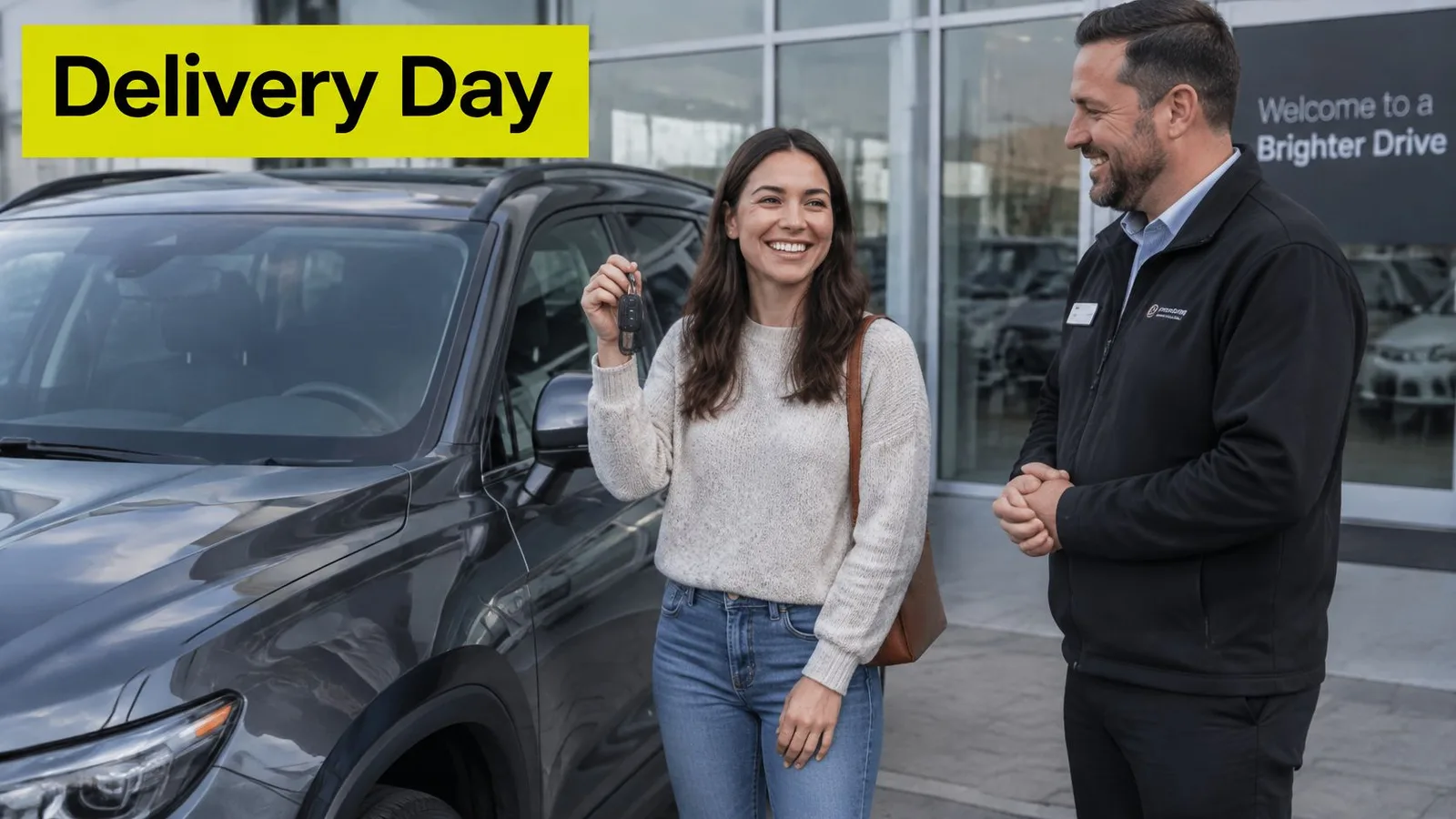
Consent, backdrop, and nothing else
- Get written consent covering the photo, the name, and the tag. Verbal permission on the showroom floor isn't enough when someone changes their mind a week later.
- Use one backdrop for every delivery. The same spot by the sign, the same angle. Over time it becomes a visual signature and a running record of how many people drove home in a car this month.
- Leave deal terms out. No payment, no APR, no trade-in value, no credit details, regardless of what the buyer is happy to share.
- Let the buyer approve the caption. A sentence in their words outperforms anything your marketing team drafts.
Milestones work the same way. A monthly post noting deliveries, a customer collecting their third car from you, a five-year service relationship. The test is whether it reads as a celebration of the customer or a boast about the store. One earns comments, the other earns a scroll.
8 Instagram Content Formats for Dealerships at a Glance
| Content Type | Primary Format | Best For | Main Effort |
|---|---|---|---|
| Short-Form Walkaround Reels | 15–30-second vertical video | Independent used-car dealerships producing listing videos at scale | Creating a consistent posting schedule and making photo-based videos feel engaging |
| New Arrival Carousels | Multi-image carousel with standardized vehicle angles | Franchised dealerships standardizing vehicle presentation across staff and locations | Preparing consistent photos and slide layouts |
| Personal Video Messages From Sales Staff | Short face-to-camera or voice-led video | Automotive sales teams sharing vehicle pages and personal videos with shoppers | Coaching staff and verifying vehicle details and claims |
| Before-and-After Photo Transformations | Side-by-side or swipe comparison | Dealership marketing and merchandising teams producing listing photos and videos | Ensuring edits are accurate and do not hide vehicle condition |
| Window Sticker and Buyer's Guide Explainers | Educational carousel or short video | Dealership owners and compliance managers using documentation and regulatory tools | Researching requirements and reviewing content for accuracy |
| Behind-the-Scenes Lot and Team Content | Candid photos, short videos, or Stories | Independent used-car dealerships managing inventory photography in-house | Coordinating staff consent and keeping sensitive information out of frame |
| Shopper Questions and Vehicle FAQ Posts | Q&A carousel, short video, or Story poll | Automotive sales teams sharing vehicle pages and personal videos with shoppers | Gathering questions and checking specifications |
| Customer Delivery and Milestone Posts | Customer photo, thank-you video, or milestone post | Franchised dealerships and sales teams building trust with shoppers | Obtaining written consent and protecting customer privacy |
Build Your Posting Week, Then Let the Photos Do the Work
Pick up a calendar and assign each format a fixed slot. A week that runs without anybody thinking hard looks like this:
- Monday: a walkaround Reel for the most interesting car that landed over the weekend.
- Tuesday: a new-arrival carousel using the standard slide order.
- Wednesday: a Story question sticker, answered on Thursday.
- Thursday: a personal video message from one salesperson on one vehicle.
- Friday: a before-and-after comparison.
- Saturday: a behind-the-scenes Story from the prep bay.
- Sunday: a delivery post or a monthly milestone.
Start with Monday and Tuesday only. Those two formats run directly off listing photos, which means the account stays active through your busiest stretch without anyone picking up a camera a second time. Add the others once those two are automatic.
The tooling matters more than the creativity here. CarShots turns phone photos into standardized, studio-quality listing images and 15-second walkaround videos, so each vehicle you photograph for the website also produces the Reel and the carousel. A new dealer's first car is free, up to 10 photos, no card required, which is enough to see whether the output looks like your lot or like a stock photo library.
The pattern that beats everything else is unglamorous. A dealership that posts a plain walkaround every Monday for a year will outperform one that spends three weeks on a cinematic brand film and then goes quiet. Consistency compounds. Production budgets don't.
So pick two formats from this list. Commit to them for 30 days, at the same time each week, judged on saves and messages rather than likes. If the account still feels like a chore after a month, the format is wrong, not the platform.
CarShots converts the photos your team already takes into studio-quality listing images and 15-second walkaround videos, so every car you photograph for the website also becomes content for the feed. If your grid has gone quiet because posting felt like a second job, run one car through the process and see what comes back. Start free at CarShots with your first vehicle, up to 10 photos.
- car dealership instagram ideas
- dealership social media
- automotive marketing
- instagram reels for dealers
- inventory content