

On this page
- Table of Contents
- 1. Third-Party Automotive Marketplace Listings
- 2. Google Business Profile and Local Search Optimization
- 3. Short-Form Walkaround Video on Social Media
- 4. Dealership Website Inventory Pages and SEO
- 5. Paid Search and Retargeting for Vehicle Inventory
- 6. Personal Video Messages from Sales Staff
- 7. Online Instant Offers and Trade-In Lead Capture
- 8. Shopper Follow-Up Through CRM, Alerts, and Engagement Tracking
- How the eight lead-generation strategies compare
- Turning These Eight Strategies Into One Follow-Up System
A shopper submits a web inquiry on Saturday afternoon. Your listing shows the vehicle photographed from different angles against mismatched backgrounds, and the shopper can't tell whether the mark on the bumper is damage or glare. Your salesperson finally replies on Monday, asking when they'd like to come in. By then, another dealership has answered the question and sent a useful walkaround.
That's a lead-generation problem, but buying more traffic won't fix it. Before increasing spend, check where shoppers lose confidence between seeing a vehicle, submitting an inquiry, and receiving an answer they can act on.
The response gap is measurable. In a late-2024 study of 1,700 dealerships, 26% omitted information about the specific vehicle and 74% failed to provide a price quote, according to Dealership Guy's coverage of the dealership-response study.
Operating principle: An acknowledgment isn't a useful response. Answer the shopper's question, provide vehicle-specific evidence, and offer a clear next step.
Effective lead generation for car sales connects marketplace listings, local search, social video, inventory pages, advertising, personal outreach, trade-in tools, and CRM follow-up. Judge each by more than inquiry volume. Ask whether your staff receives enough context to respond accurately, with the right photos, pricing, and appointment options.
Table of Contents
- 1. Third-Party Automotive Marketplace Listings
- 2. Google Business Profile and Local Search Optimization
- 3. Short-Form Walkaround Video on Social Media
- 4. Dealership Website Inventory Pages and SEO
- 5. Paid Search and Retargeting for Vehicle Inventory
- 6. Personal Video Messages from Sales Staff
- 7. Online Instant Offers and Trade-In Lead Capture
- 8. Shopper Follow-Up Through CRM, Alerts, and Engagement Tracking
- How the eight lead-generation strategies compare
- Turning These Eight Strategies Into One Follow-Up System
1. Third-Party Automotive Marketplace Listings
Marketplaces put your inventory beside competing vehicles. That makes them useful for reaching shoppers, but unforgiving when your photos, price, or description leave unanswered questions.
In its historical buyer-journey findings, Cox Automotive reported that 68% of buyers visited third-party sites such as Kelley Blue Book or Autotrader. Treat marketplace merchandising as part of the sales conversation, not merely an inventory export.
Start with the feeds you use for Autotrader, Cars.com, CarGurus, or TrueCar. Confirm that the published price, mileage, trim, and availability match your inventory records. A feed marked successful doesn't guarantee that the shopper-facing listing is correct.
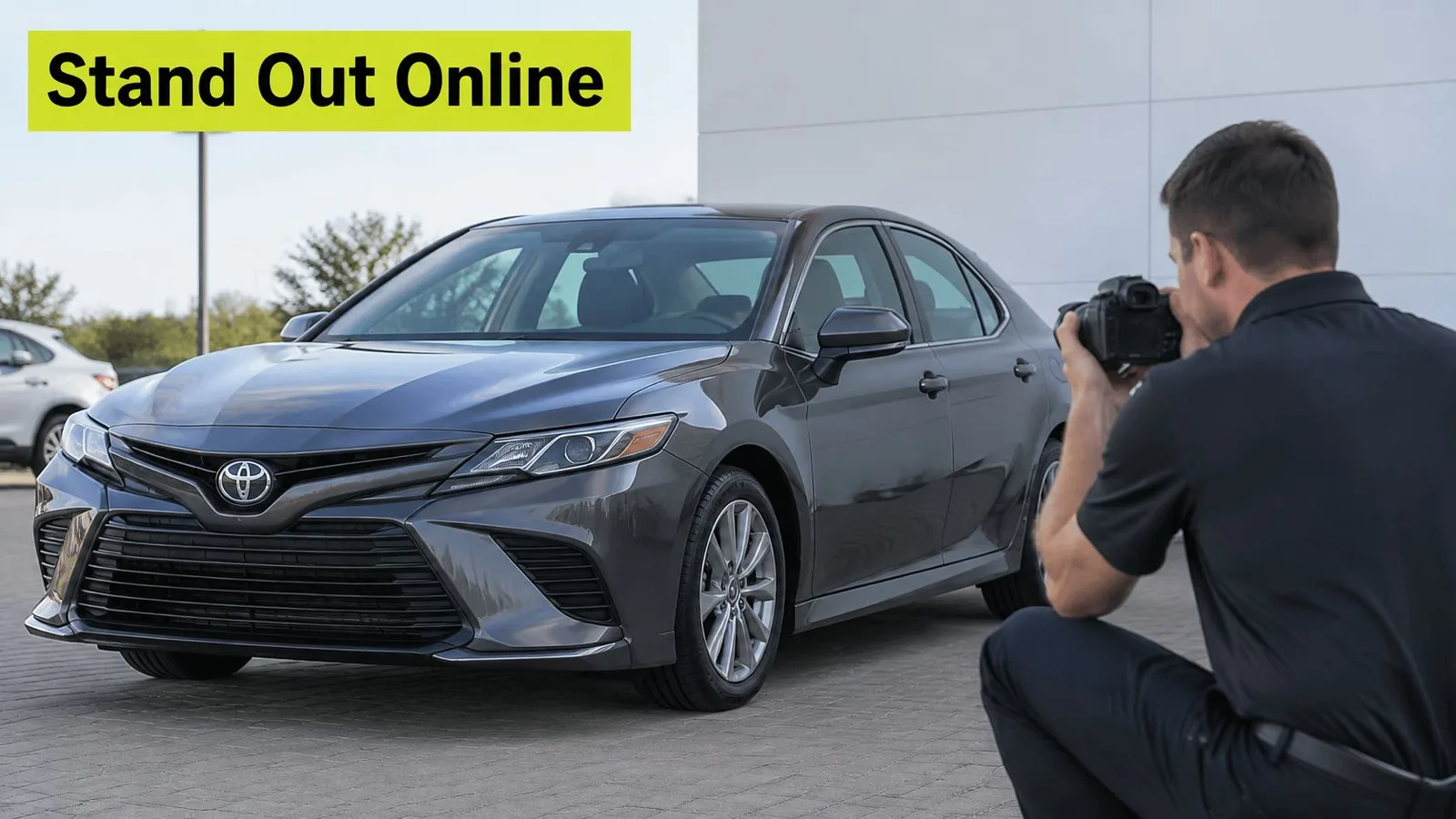
A consistent capture position makes inventory easier to compare.
Make the Listing Useful Before Buying More Exposure
- Standardize capture: Use a repeatable exterior sequence, then photograph seats, cargo space, controls, tires, and relevant condition details.
- Keep editing honest: Use automotive photo editing to improve presentation without removing damage or changing vehicle features.
- Preserve lead context: Send the marketplace name, stock number, vehicle, and shopper's original question into the CRM.
Say an independent lot lists a used crossover on CarGurus. A shopper asks about rear-seat wear. The salesperson should receive that question with the stock number, then send the relevant interior photo and an availability confirmation. A generic appointment request leaves the shopper doing the same research again.
Compare platform spend against appointments, arrivals, and sales, while considering assisted activity. Cheap inquiries aren't good value when they concern stale prices or vehicles that have already sold.
2. Google Business Profile and Local Search Optimization
A local shopper finds your dealership in Google Maps, checks the reviews, and taps through to inventory. If the profile points to the wrong rooftop or lists hours your sales team doesn't cover, you've created friction before anyone submits a lead.
For a dealer group, maintain a distinct, accurate profile for each eligible location. Match the address, phone number, dealership name, and destination page to that rooftop. Don't send every location's visitors to a group homepage and expect them to find the right lot.
For an independent dealership, focus on the basics before chasing more visibility. Complete the profile, select appropriate categories, explain available services, and keep holiday hours current. Use clear photos of the entrance and lot so shoppers know where to arrive.
Connect Local Discovery to a Staffed Sales Desk
A useful profile needs an operational owner, not just a marketing login.
- Route calls correctly: Test the listed number from a mobile phone and confirm who handles unanswered calls.
- Match the destination: Link to the location page or relevant inventory destination, rather than an unrelated promotional page.
- Maintain photo continuity: Use recognizable inventory photography across your profile, website, and listings.
- Handle reviews professionally: Answer concerns without publishing customer details or arguing about a transaction.
Say a shopper searches for a used truck near your suburban location. They find the profile and ask whether a listed pickup is available. The staff member answering should be able to open the same vehicle page, verify its status, and provide directions to the correct entrance.
Local visibility doesn't replace phone coverage. If nobody owns profile inquiries and missed calls, improving your profile can create more unanswered opportunities.
3. Short-Form Walkaround Video on Social Media
A social walkaround should help a shopper identify a vehicle worth investigating. It doesn't need a cinematic opening, a long dealership introduction, or music that obscures what the salesperson is saying.
Phone capture works best when staff follow a repeatable route around the vehicle.
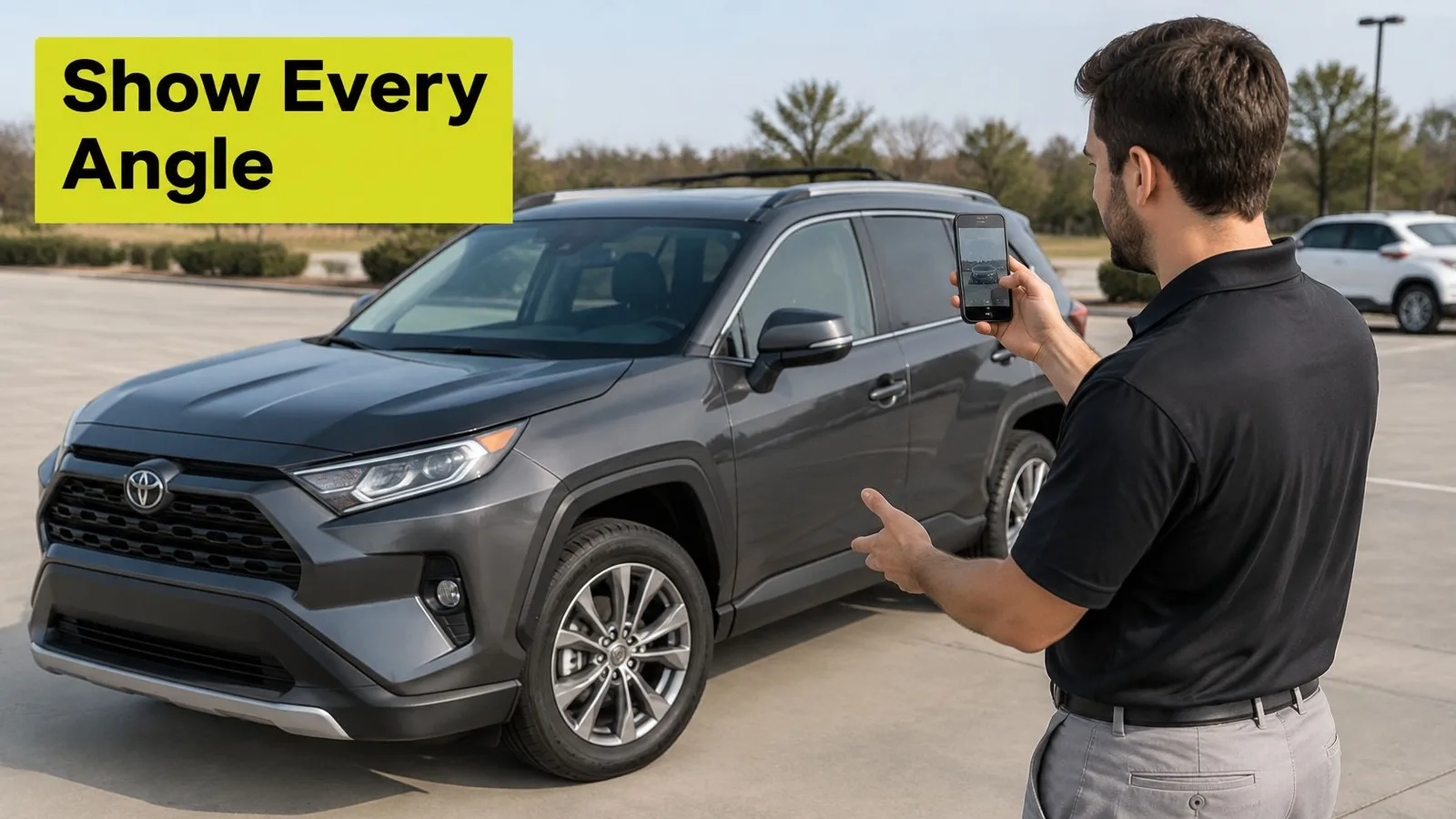
For Facebook, Instagram, TikTok, and YouTube Shorts, open with the vehicle rather than a logo. Show the exterior, useful cabin features, and the details that distinguish the trim. Add readable captions so the clip still makes sense without sound.
A used SUV with flexible seating needs different footage from a work truck. Show the SUV's cargo arrangement; show the truck's bed, hitch, and relevant equipment. Don't assume an attractive front-quarter shot answers the buyer's practical questions.
Give Viewers Somewhere Specific to Go
Use walkaround videos as an entry point to the full vehicle information, not a substitute for it. Direct viewers to the listing or invite a message about that exact stock number.
This example shows how a vehicle presentation can work in video form.
Assign responsibility for comments and direct messages before publishing. If a salesperson posts a vehicle on a personal account, the dealership still needs the conversation recorded and covered when that employee is unavailable.
A video view is attention. A vehicle-specific conversation is a sales opportunity.
Track listing visits, substantive messages, and appointments alongside views. A popular clip with no clear inventory destination can consume production time without giving sales staff anything useful to follow up.
4. Dealership Website Inventory Pages and SEO
Your website is where you control the handoff from vehicle research to a direct inquiry. The vehicle detail page should give shoppers enough information to ask a meaningful question, rather than forcing them to request basic facts.
The scale is substantial. Foureyes' automotive dealer benchmarks analyzed more than 900 million visits and 29 million unique inventory listings across 22,000 dealership websites in 2023. Those are dataset totals, not a traffic target for your store.
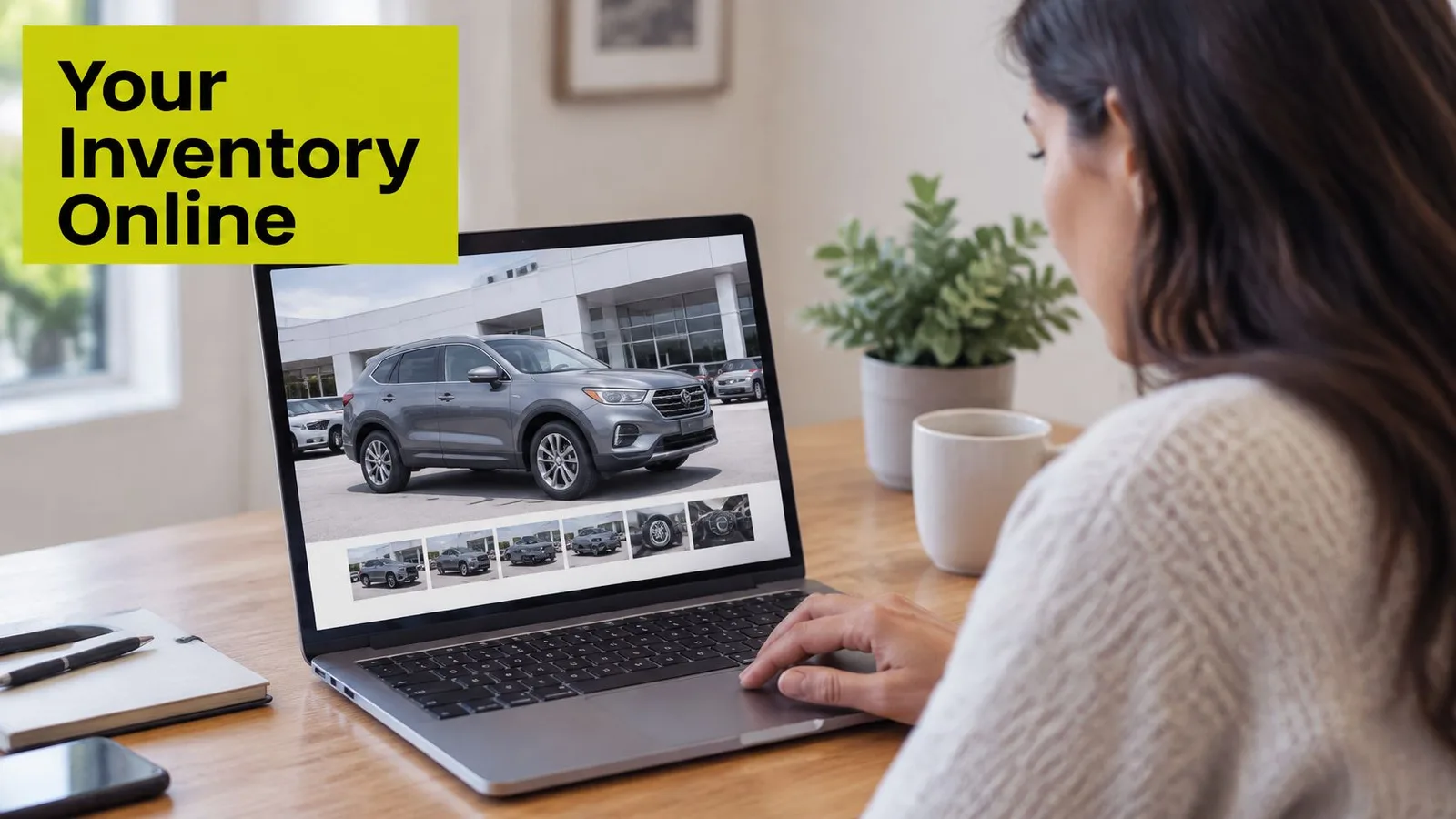
Review the page as a shopper would see it on a phone.
Build Around the Vehicle and the Question
Include the make, model, model year, trim, and location naturally in titles and headings. Write descriptions from verified equipment and condition details rather than copying a generic manufacturer paragraph.
- Show the evidence: Include consistent photos, useful video, specifications, and available vehicle documentation.
- Explain the price: Make the advertised price and applicable fees easy to find and understand.
- Keep inquiry simple: Ask for contact details and the shopper's question without requiring an unnecessary questionnaire.
- Test the handoff: Submit the form yourself and confirm the CRM receives the correct vehicle and message.
Say a shopper lands on a used minivan page from a model-and-city search. Photos of the seating configuration and a clear equipment description can answer their initial questions. Their inquiry can then focus on availability or a visit instead of requesting missing basics.
Check mobile loading, image sizes, form usability, and broken buttons. A page that looks complete on a desktop can still fail at lead capture on a phone.
5. Paid Search and Retargeting for Vehicle Inventory
Paid advertising exposes weak merchandising quickly. If you send a shopper searching for a particular model to a homepage carousel, you're paying them to repeat their search.
Build Google Ads campaigns around inventory you can sell and questions your team can answer. Separate substantially different shopper intents, such as certified vehicles, work trucks, and budget-focused used inventory. Give each campaign a relevant destination.
Retargeting needs the same discipline. A shopper who viewed a particular SUV should see accurate availability and pricing, not an outdated offer that remains active after the vehicle sells.
Keep Ads, Inventory, and Follow-Up Aligned
- Choose the destination: Use the exact vehicle page where practical, or a tightly filtered inventory page with relevant alternatives.
- Review search terms: Exclude irrelevant repair, parts, employment, and other non-sales searches when they don't match the campaign.
- Maintain creative accuracy: Update price changes, remove sold inventory, and avoid unsupported scarcity claims.
- Carry campaign context: Preserve campaign identifiers and the landing vehicle in the CRM where your tools support it.
Say your dealership advertises certified pre-owned crossovers. The landing page should show available certified inventory and explain the relevant vehicle details. If the shopper asks about a specific unit, the salesperson shouldn't need to ask which advertisement they clicked.
Budget rule: Don't increase spend on a campaign until staff can deliver a useful response to the inquiries it already generates.
Review cost per qualified inquiry, appointment, arrival, and sale. A campaign with inexpensive forms may still perform poorly if shoppers misunderstand the advertised vehicle or price. Retargeting also requires appropriate privacy controls and consent handling, not just an installed advertising pixel.
6. Personal Video Messages from Sales Staff
A personal video is most useful when it answers something a template can't. If a shopper asks whether a truck bed has scratches, walk to the truck and show the bed. Don't send a polished exterior montage and call it personalized.
This is follow-up-led lead generation: you're turning an existing inquiry into a more qualified conversation or restarting a stalled opportunity. It deserves a place in the sales process, but not as compulsory production work for every contact.
Start by stating your name and identifying the vehicle. Answer the actual question, show the relevant feature or condition, and offer a straightforward next action. Send the video with a short written summary so the shopper doesn't have to watch it to understand your answer.
Prioritize Evidence Over Performance
A salesperson doesn't need to be entertaining. They need to be accurate, audible, and useful.
- Use the vehicle: Confirm the stock number before recording, especially when similar units are parked together.
- Show the requested detail: Demonstrate seat movement, cargo access, controls, or visible condition rather than describing everything from memory.
- Respect privacy: Keep customer paperwork, computer screens, and other shoppers out of the frame.
- Record the outcome: Log the video and the shopper's response in the CRM.
For example, a shopper hesitates after a test drive because they aren't sure a folded rear seat will accommodate their equipment. A follow-up video demonstrating the space gives them something concrete to assess.
Video shouldn't delay a basic answer. If the shopper asks for availability or price, send that information promptly. Add a video when it resolves uncertainty, and don't require the shopper to open a recording to discover an essential fact.
7. Online Instant Offers and Trade-In Lead Capture
Trade-in inquiries give your team a specific transaction to discuss. The owner has a vehicle, a possible replacement need, or a reason to sell. Your first response should address that situation instead of immediately pushing replacement inventory.
Richer lead information can support a better handoff. In Cox Automotive's 2023 Car Buyer Journey study, dealership-of-purchase satisfaction was 77% among enhanced-lead submitters, compared with 67% among basic-lead submitters. That finding supports collecting useful context, not making every field mandatory.
Keep the valuation conversation clear and grounded in the vehicle.
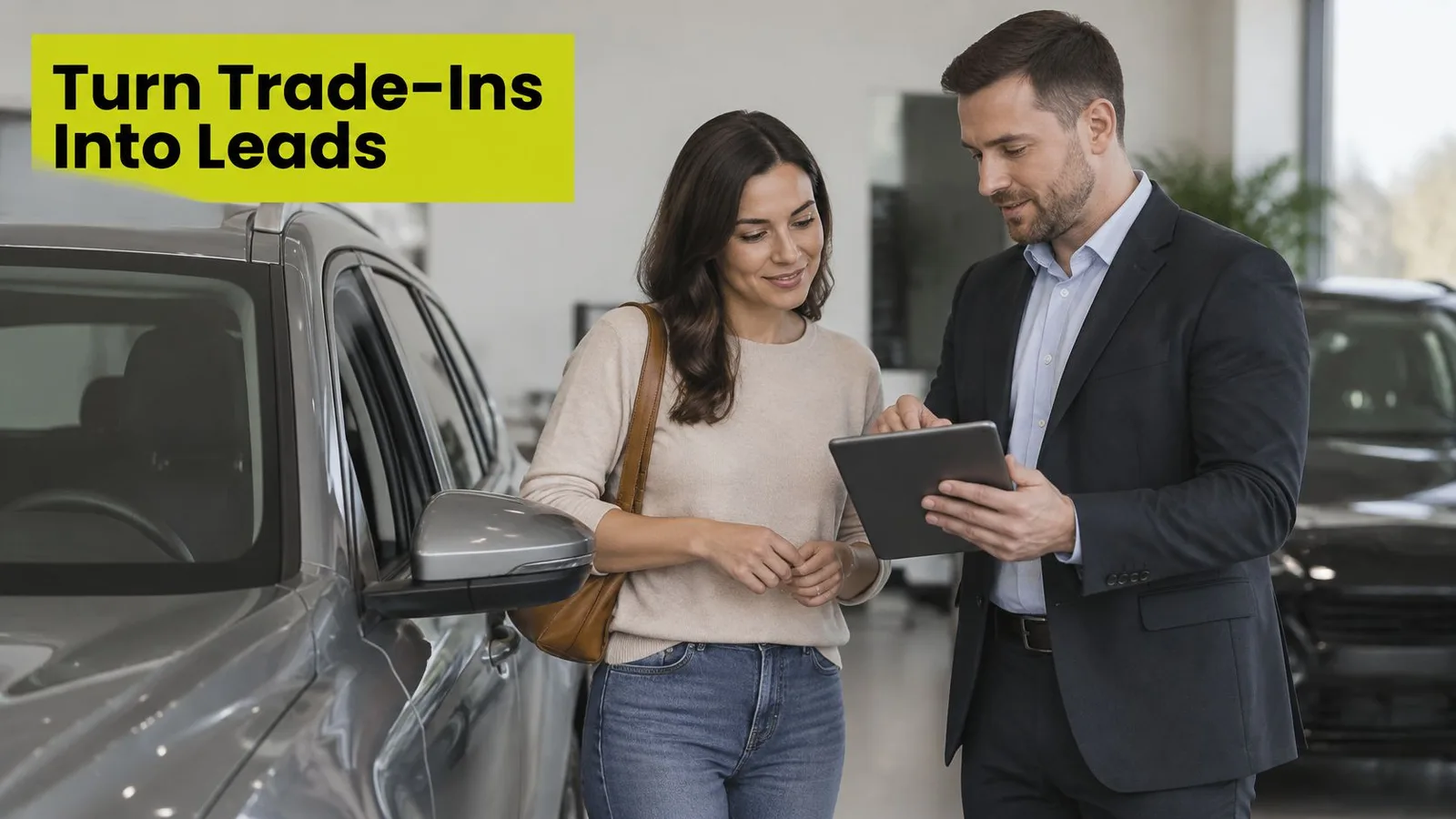
Distinguish an Estimate From a Confirmed Offer
Explain what the tool produces. If the result is an estimate subject to inspection and verification, say so before submission and repeat it in the response. If it's an offer with conditions, present those conditions clearly.
Use VIN decoding to reduce typing, then collect mileage, condition, and ownership information relevant to the appraisal. Ask whether the owner wants to sell outright or trade, but don't make replacement-vehicle selection a barrier.
Say a service customer requests a valuation while considering a larger vehicle. Route the request to the appraisal owner, confirm the submitted details, and explain the inspection process. Only then connect the conversation to suitable replacement inventory.
Track where valuation requests originate, including service pages and sales pages. Measure completed appraisals and acquired vehicles alongside lead volume. A form that produces many submissions but confusing valuation expectations can create unnecessary work for both the buyer and the appraisal team.
8. Shopper Follow-Up Through CRM, Alerts, and Engagement Tracking
A CRM can assign a lead without ensuring anyone answers it. Your process needs a named owner, backup coverage, and a distinction between automated acknowledgment and useful human response.
Conventional CRM attribution also misses substantial activity. In a Clarivoy sample of 875,000 automotive sales, only 8% were traceable in CRM as sales resulting from an inquiry, according to Cox Automotive's account of the analysis. Don't judge every channel solely by submitted forms.
Use engagement signals to prioritize attention, but don't mistake a page opening for permission to send repeated messages. A returning shopper may be comparing options, sharing the vehicle, or checking a detail.
Route the Context, Not Just the Contact
Configure VinSolutions, DealerSocket, eLead, or your existing CRM around the same practical requirements.
- Assign ownership: Route by rooftop, vehicle, and existing customer relationship where appropriate.
- Provide backup: Reassign unhandled inquiries when the primary salesperson is unavailable.
- Preserve the conversation: Keep the original question, vehicle, prior answers, and preferred contact method together.
- Close the loop: Record appointments, arrivals, sales, opt-outs, and reasons the opportunity stopped progressing.
Say a shopper returns to a vehicle page after receiving a quote. Knowing when a shopper opens a vehicle link can help staff prioritize a relevant availability update. It shouldn't trigger a message that makes the shopper feel watched.
For after-hours chat or AI-assisted replies, use current inventory information and clearly escalate unverified questions. The morning salesperson should inherit the conversation, not ask the shopper to start again. Automation can acknowledge interest; a person still owns accuracy and continuity.
How the eight lead-generation strategies compare
| Item | Pricing Model | Best For | Main Trade-Off |
|---|---|---|---|
| Third-Party Automotive Marketplace Listings | Pay-per-lead, subscription, or listing fee | Reaching high-intent vehicle shoppers | Fees and direct competition can reduce margins |
| Google Business Profile and Local Search Optimization | Low-cost setup and maintenance | Building local visibility and trust | Rankings depend partly on proximity and review activity |
| Short-Form Walkaround Video on Social Media | Staff time and optional promotion spend | Showcasing vehicles to mobile audiences | Reach is unpredictable and requires consistent posting |
| Dealership Website Inventory Pages and SEO | Ongoing website and SEO investment | Owning traffic and capturing first-party leads | Results can take months and require maintenance |
| Paid Search and Retargeting for Vehicle Inventory | Pay-per-click advertising | Generating targeted leads quickly | Click costs can be high and campaigns need close management |
| Personal Video Messages from Sales Staff | Staff time; tools may add cost | Building rapport with high-intent shoppers | Time-consuming to scale and quality varies by salesperson |
| Online Instant Offers and Trade-In Lead Capture | Tool or platform costs vary | Attracting sellers and trade-in prospects | Inaccurate offers or slow follow-up can disappoint customers |
| Shopper Follow-Up Through CRM, Alerts, and Engagement Tracking | $149 per month per dealership location for Car Pages Pro | Improving response speed and lead follow-up | Requires staff adoption and careful consent management |
Turning These Eight Strategies Into One Follow-Up System
Every channel works better when the first useful response is fast, specific, and easy to act on. Marketplace exposure, local visibility, video, and advertising can introduce shoppers to your inventory. Staff still need accurate vehicle content and a clear process for continuing the conversation.
The goal isn't necessarily an entirely digital sale. In Cox Automotive's 2024 Car Buyer Journey study, 63% of surveyed buyers said an omnichannel experience combining online and in-store activity would be ideal. Build your lead process to help shoppers move between those settings without repeating information or losing progress.
Start with channels your dealership already uses. Fix inventory presentation and response ownership before launching another campaign. An additional source won't solve inconsistent photos, stale pricing, or an inbox everyone assumes someone else is covering.
Define What a Useful Response Includes
Give the sales team a common standard, then let them adapt it to the shopper.
- Answer the question: Address availability, price, condition, equipment, or the appraisal request directly.
- Provide evidence: Include the relevant photo, video, document, or vehicle page.
- Explain uncertainty: Say what needs verification and who will confirm it.
- Offer a next action: Suggest a visit, appraisal, further demonstration, or the shopper's preferred way to continue.
Review lead sources weekly with sales and merchandising together. Look at the original listing, the inquiry, the first substantive answer, and the outcome. This separates weak traffic from strong shopper interest that your team handled poorly.
Keep response speed and response completeness as distinct measures. An immediate automated email shouldn't hide a delayed answer to a pricing question. Likewise, a quick call attempt doesn't resolve a request for a photo of vehicle condition.
CarShots can support this workflow with consistent phone-based listing photos and shareable Car Pages that organize vehicle information. Car Pages Pro adds shopper engagement alerts and CRM lead delivery as ADF/XML, helping staff connect the vehicle content they send with the inquiries they receive.
Start your audit with a recent batch of web leads. Compare submission timestamps with the first useful response, inspect the vehicle information sent, and assign responsibility for every recurring gap before adding more traffic.
CarShots offers standardized vehicle photos, walkaround videos, and shareable vehicle pages that help sales teams answer inventory questions with useful evidence. Visit CarShots to build a consistent presentation and follow-up workflow around the vehicles you already have on the lot.
- car lead generation
- car dealership leads
- automotive lead generation
- dealership marketing
- car sales leads